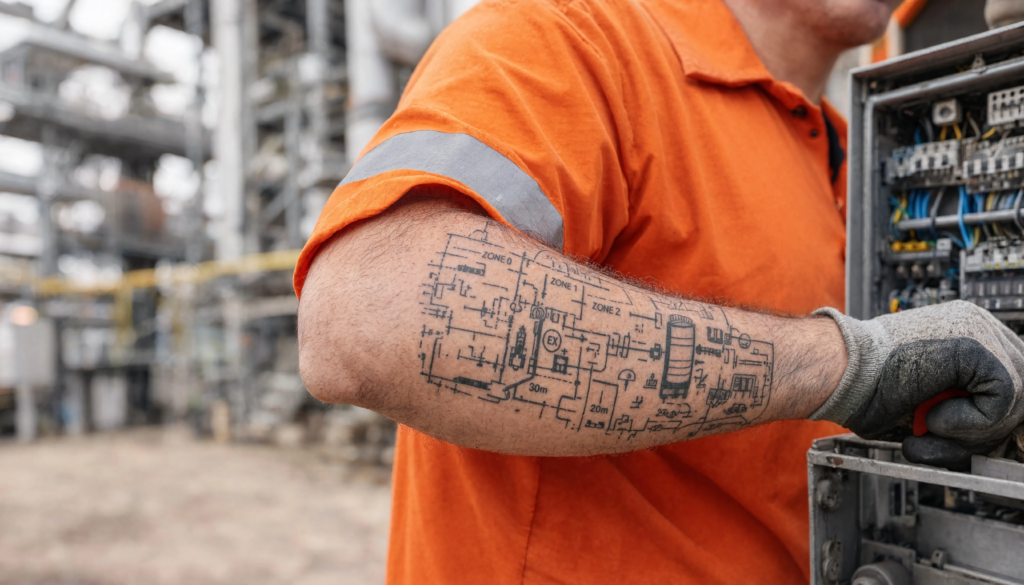
A hazardous-area classification is more than a drawing pinned to a wall or stored in an engineering folder. For anyone working with electrical equipment in hazardous areas, it is a critical reference that helps determine where an explosive atmosphere may exist, and what type of electrical equipment and installation practices are appropriate. Yet, one of the biggest risks is treating that classification as a set-and-forget document.
Hazardous areas can change as a site changes. Equipment is replaced, processes are modified, ventilation systems are altered, new chemicals or gases are introduced, and production areas can be expanded or reconfigured. Even maintenance activities can change the conditions around electrical equipment.That means the classification always needs to remain relevant to what is actually happening on site.
The classification should follow the work
For electrical workers, this is particularly important. Before installing, modifying, inspecting or maintaining electrical equipment in a hazardous area, it is essential to understand the classification of the location.
A Zone 0, Zone 1 or Zone 2 area presents different requirements, and the equipment selected needs to be suitable for the particular hazardous environment. This is where understanding hazardous-area documentation becomes more than a compliance exercise, it becomes part of making sound decisions in the field.
A classification drawing might show the extent of a hazardous zone, however the real question for an electrician is, does the work I am about to undertake still match the conditions represented on that drawing?
Change can create new risk
Consider a site where a pump, storage vessel or process line is modified. The change may appear relatively minor, however if it affects the release of flammable gas or vapour, ventilation, or the location of potential ignition sources, it could affect the hazardous-area assessment.
Similarly, replacing electrical equipment isn’t necessarily as simple as removing the old unit and installing a new one. The replacement equipment must be appropriate for the hazardous area in question, and the conditions in which it will operate.
This is why hazardous-area awareness needs to extend beyond the original installation team. Maintenance electricians, contractors, supervisors and anyone involved in modifications need to understand the classification and how it applies to their work.
For electrical professionals, this means hazardous-area competency isn’t just about knowing the different types of protection or recognising an Ex marking. It is also about understanding the relationship between the hazardous-area classification, the electrical equipment, and the work being performed. For instance, in the context of mining, the Mine publication states “If hazardous area drawings, equipment registers, inspection records or verification dossier information have not been kept up to date, a mine may be carrying compliance and operational risk that is not immediately obvious” (Nridigital.com, 2026).
The drawing may be sitting in the engineering office, however its purpose is ultimately realised out in the field. In a hazardous area, the question isn’t just “What was this area classified as?” It’s “Is that classification still accurate for the way this site operates today?”
That distinction can make a significant difference to overall electrical safety, compliance, and the prevention of ignition in potentially explosive atmospheres.
References
Nridigital.com. (2026). HazardProof Company Insight – Mine | Issue 161 | August 2026. [online] Available at: https://mine.nridigital.com/mine_aug26/hazardproof_company_insight